Business901 Book Specials from other authors on Amazon

Saturday, August 31, 2013

CAP-Do: Connecting Demand to the Lean Supply Chain

CAP-Do: What makes CAP-Do so attractive is that it assumes we do not have the answers.  It allows us to create a systematic way to address the problems (pain) or opportunities (gain) from the use of our products and services. CAP-Do is an emergent process. You may know the outcomes that you desire but that is relatively unimportant in today’s world or The Challenger Model. It is the outcomes that your customer requires and how you adapt to his/her processes to produce their needed results. This takes a willingness to discover as you go versus leading the way. CAP-Do The essence of Pausing or as Peter Senge calls it “Presencing” is the act of acknowledging that there is more than right a answer. We refrained from trying to find answers or problem-solve in the Check and Adjust stage. We can now gather and understand the actions, roles and uses of our product/services. This is the stage where the connection between supply and demand occurs. Most organizations try to choose between what we know (Check) and what we learned (Adjust). The key though is acceptance and understanding or as I have explained earlier; empathy. This empathetic connection is important; not only to our customer, but as an external team we must also empathize with our internal organization. It is this preparation, done with a pause, before we move into the planning stage that is imperative. As we cycle or iterate between the supply and the demand world we will discover complementary answers. The obstacles will get smaller and smaller. The organization that instills the CAP-Do process will put a tremendous amount of faith in the Sales and Marketing teams. These teams must work and overcome the tension between supply and demand. CAP-Do is a Lean process that supports the tenants of Service Dominant Logic and Jobs to be Done. It requires a fundamental understanding of the idea that there is not one single answer in this world for any problem. The answers lie with the people that are addressing the problem at the moment and have a particular job-to-get-done. It is in understanding their needs and their outcomes with greater wisdom. More fundamentally, you create a way to get your own job done in any situation.
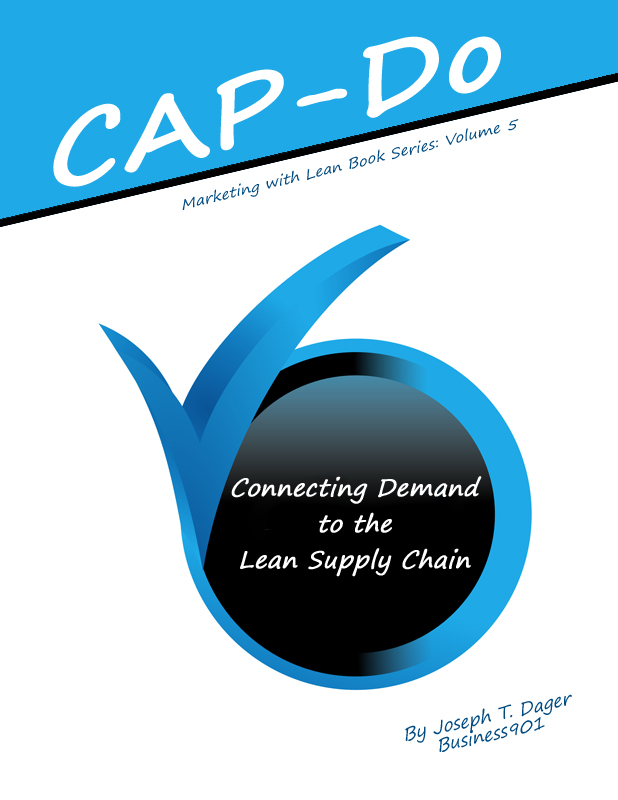
If you would to purchase CAP- Do, it is available for download as a PDF.

Chapter Outlines:

Check Chapter 1 - Structural Conflicts Chapter 2 - Enterprise Thinking Chapter 3 - A Learning Process, not a Teaching Process Adjust (Act) Chapter 4 - A Perspective of Strength Based Principles Chapter 5 - Lean and the OODA Loop Pause Chapter 6 – Pause Plan Chapter 7 - Lean Sales Methods Chapter 8 - Retool your Sales and Marketing with Lean Do Chapter 9 - Experiment through Prototypes Chapter 10 - Lean Thoughts Chapter 11 - Doing CAP-Do Chapter 12 - CAP-Do Process – Working with SDCA, PDCA, EDCA

CAP-Do is included in the Marketing with Lean Book Series at no additional cost.

Friday, August 30, 2013

Empathy is the Fundamental Principle of Understanding.

From my blog post, Do you only Listen through your Ears?:

Empathy is a major differentiator between the traditional process methodologies of Six Sigma, and I say this tongue–in-cheek, Lean. Many times when you review Design for Six Sigma, Lean Startup, Lean Product Development, and Lean Design (the list goes on), seldom when you search (like never) the index of the book will you find the words Empathy. I think that is a major difference in Design Thinking, Service Design and as I like to call it, EDCA.

That word empathy is a hard thing to practice. Some people may say you are born with or raised with it. I think you can acquire it, but it takes a different set of listening skills than most of us  develop.

In a recent article in the New York Times, The Morality of Meditation, I have taken the liberty of pulling several quotes:

MEDITATION is fast becoming a fashionable tool for improving your mind. With mounting scientific evidence that the practice can enhance creativity, memory and scores on standardized intelligence tests, interest in its practical benefits is growing.

This is all well and good, but if you stop to think about it, there’s a bit of a disconnect between the (perfectly commendable) pursuit of these benefits and the purpose for which meditation was originally intended.

The heightened control of the mind that meditation offers was supposed to help its practitioners see the world in a new and more compassionate way, allowing them to break free from the categorizations (us/them, self/other) that commonly divide people from one another.

Meditation increased the compassionate response threefold.

They confirmed that even relatively brief training in meditative techniques can alter neural functioning in brain areas associated with empathic understanding of others’ distress — areas whose responsiveness is also modulated by a person’s degree of felt associations with others.

If we want to connect with our customer, if we want to develop an intuitive read of his organizations needs, do we not need first to have compassion and empathy. It is the act of empathy that we develop through using the Sales Neuro Charger and/or meditation that allow us to utilize them in the sales process. Empathy is the fundamental principle of understanding. How can we develop objective views without it?

Thursday, August 22, 2013

How do you Handle an Impossible Project?

Michael Dobson (@sidewisethinker), author of Project: Impossible – How the Great Leaders of History Identified, Solved and Accomplished the Seemingly Impossible – and How You Can Too! said in the podcast:

Well, to be honest one of the things, if it hasn't happened in your career yet, I'm saying this to the audience. I'm sure you've been there. If you haven't been given a project that is sort of absurdly impossible on the face of it, well, you haven't been around for a very long time. Impossible projects in any field in any discipline, well, this is just one of those little situations in life that sooner or later we are all confronted with for better or worse. Win, lose or draw, we all have to face it.

Listen to the rest of the conversation on impossible projects.

Download Podcast: Click and choose options: Download this episode

or go to the Business901 iTunes Store.

Mobile Version

Android APP

MICHAEL SINGER DOBSON is a marketing executive, project management consultant and nationally-known speaker. He has been a staff member of the Smithsonian National Air and Space Museum, award-winning game designer, and career counselor in his varied career. My favorite book of Michael’s, out of twenty or so he wrote, is Creative Project Management. You can find Michael on Twitter @sidewisethinker or his main website sidewiseinsights.com

.